1988
The beginning
Accumulators and torches
A small family unit opens in Madhya Pradesh, building accumulators and torches checked by hand.

Since 1988 · Vijeta Accumulators and New Technologies
A family workshop in Madhya Pradesh became a lead-acid battery plant at Vijeta Accumulators and New Technologies. Nearly four decades later the same family runs it, and every unit still leaves the floor load-tested.
1988
First workshop
8
Stages under one roof
100%
Units load-tested
VIJETA began in a small Madhya Pradesh workshop, making accumulators and torches for dealers who could return anything that failed. That return counter set the rule the company still runs on: a product must deliver exactly what its label says, for as long as it says.
The range has since grown into lead-acid batteries for homes, cars, tractors, trucks, telecom sites and industry, with lithium systems alongside and government tenders served direct from the plant. Casting, pasting, assembly, formation and testing still happen under one roof at Vijeta Accumulators and New Technologies — and every unit is load-tested before dispatch.
Different products. Same rule since 1988.
Every figure comes off the same factory floor. No outsourced shortcuts, no skipped tests.
Government & tender supply1988
01Year the workshop opened
Accumulators and torches, before batteries.
100%
02Units load-tested
Every battery, before it leaves the floor.
6
03States supplied
Through open tenders and institutional orders.
36 mo
04Gold series cover
Silver carries 24 months.
VIJETA · Vijeta Accumulators and New Technologies · M.P. · India — manufacturing since 1988
Ten points on the line — the product, the material, the selling and the testing, in the order they happened.
Swipe, scroll or use the arrows
In 1988 the family opened a small manufacturing unit in Madhya Pradesh. The first products were accumulators and torches — small, unglamorous electrical goods, assembled by hand and sold through dealers who could return anything that failed.
That return counter taught the rule the business still runs on: a product must do exactly what its label says, for as long as it says. No inflated ratings. No quiet shortcuts.
In 2000 the workshop moved into lead-acid batteries and chargers. Casting, pasting, assembly, formation and testing were brought under one roof at Vijeta Accumulators and New Technologies, so the family could control every stage instead of trusting someone else's.
“A battery is judged on the morning it must start.”
The rule on our floor, since 1988.
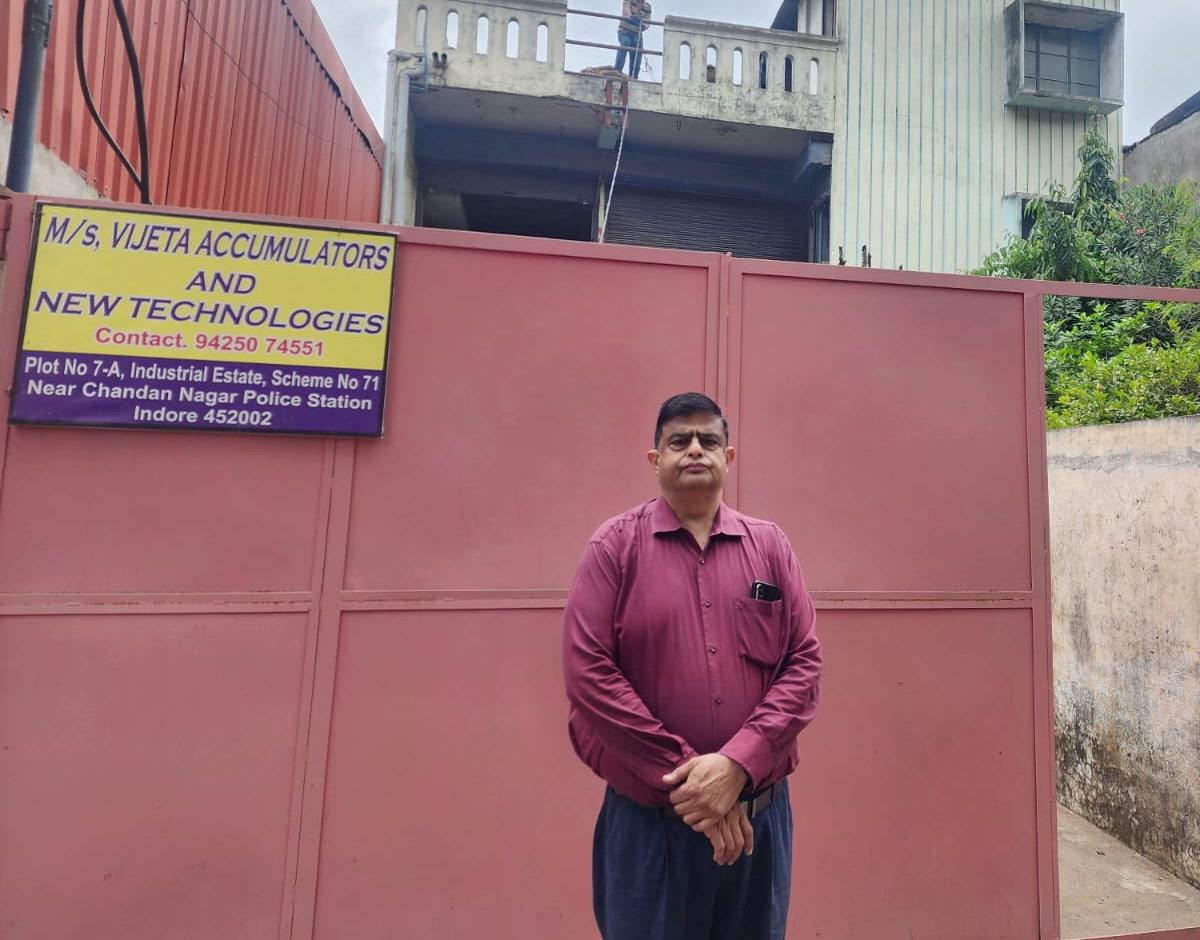
The VIJETA Accumulators unit at Indore, Madhya Pradesh.
1988
The year the workshop opened
 Est. 1988
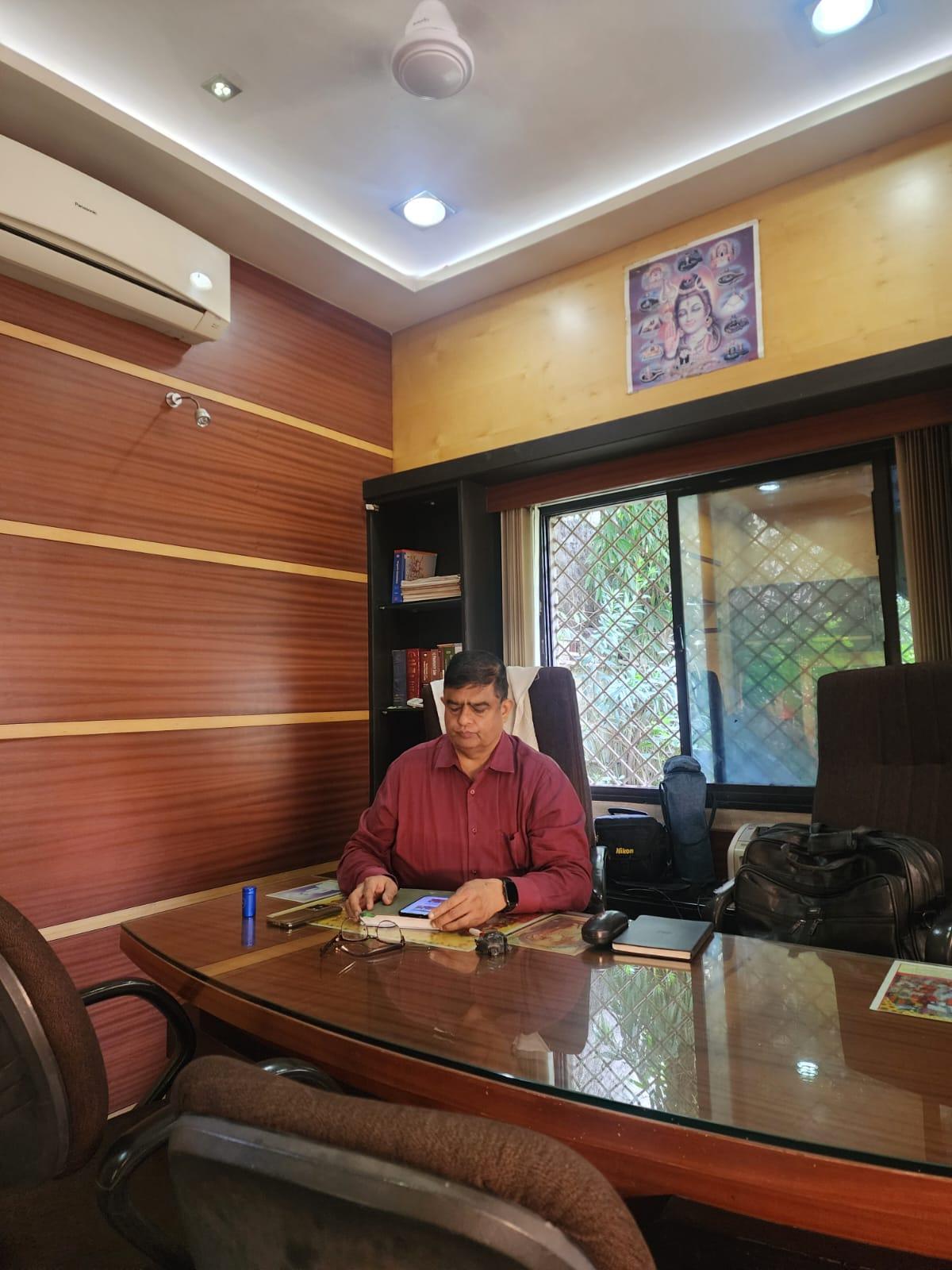
Ajay Kumar Jain
VIJETA is made by the family company Vijeta Accumulators and New Technologies, which has run this plant since 1988. The people who own the plant are the people a buyer can call.
The second generation now works in the business the founder built. The machines are newer and the lab is bigger, but the same family signs off on every battery that carries its name.
“We do not sell a battery we would not put on our own vehicle.”
The family behind VIJETA Batteries
On record
Est. 1988
Owner
Ajay Kumar Jain
Plant
Vijeta Accumulators and New Technologies
Second generation
Filmed on the VIJETA floor, Vijeta Accumulators and New Technologies.
Muted loopOn the floor
The day starts with lead alloy and ends with a sealed battery on a test bench. Grids are cast in-house, oxide paste is mixed and applied to a controlled recipe, and plates are cured under set humidity and temperature before they are formed.
That is why casting, pasting, assembly, formation and testing sit under one roof. If a plate is wrong, the floor knows before the case is sealed — and the report that travels with your battery was written at the same address it was built.
Alloy to grid
Lead-calcium grids cast on site.
Paste under control
Oxide, water and acid measured per batch.
Formation decides life
First charge run under controlled current.
Tested before dispatch
Every unit, not just a sample.
The line, stage by stage
Eight stages, start to finish
Lead alloy is cast into grids, the skeleton that carries current through the battery.
Lead oxide is mixed into an active paste with controlled water and acid ratios.
Paste is applied to the grids and cured under controlled humidity and heat so it bonds for the long term.
Plates are charged for the first time under controlled current. This is the step that decides a battery's life.
Plates and separators are stacked, welded and sealed into the container.
Electrolyte is filled and every battery receives its initial charge.
Every lot is checked for capacity, voltage and leaks before it is cleared for dispatch.
Batteries are labelled, packed and shipped with their test reports.


From spec review to delivery and warranty. Here is how a government or institutional requirement runs through the plant.
How a tender runs
Five stages, plant to site
Share the tender number or specification. We confirm what we can meet and flag any clause we cannot.
Certificates, test reports and declarations go in with the bid the first time, not in a second round.
Your order is built and batch-tested at Vijeta Accumulators and New Technologies, with reports for every lot.
Delivered to your site, installed and commissioned where the tender requires it.
Old units collected for authorised recycling, and a named contact for claims through the cover period.
Documents in the bid set
Government & power
Telecom, private power and EPC buyers are supplied the same way.
Send the tender number and line items. The desk confirms fit and documentation before you bid.
Send a tender enquiryFrom plate assembly to the final load test, every battery is checked before it is packed.
On the line
Checking starts before the case is sealed. Elements are inspected as they are stacked, units after filling, and every finished battery goes to the test bench before it is cleared for packing.
Plate stack
Alignment, welding and terminal fit.
Seal & fill
Lid, vent and electrolyte level.
Formation
Voltage and current on the first charge.
Final test
Load, capacity and leak checks.
Assembly and checking on the VIJETA floor.
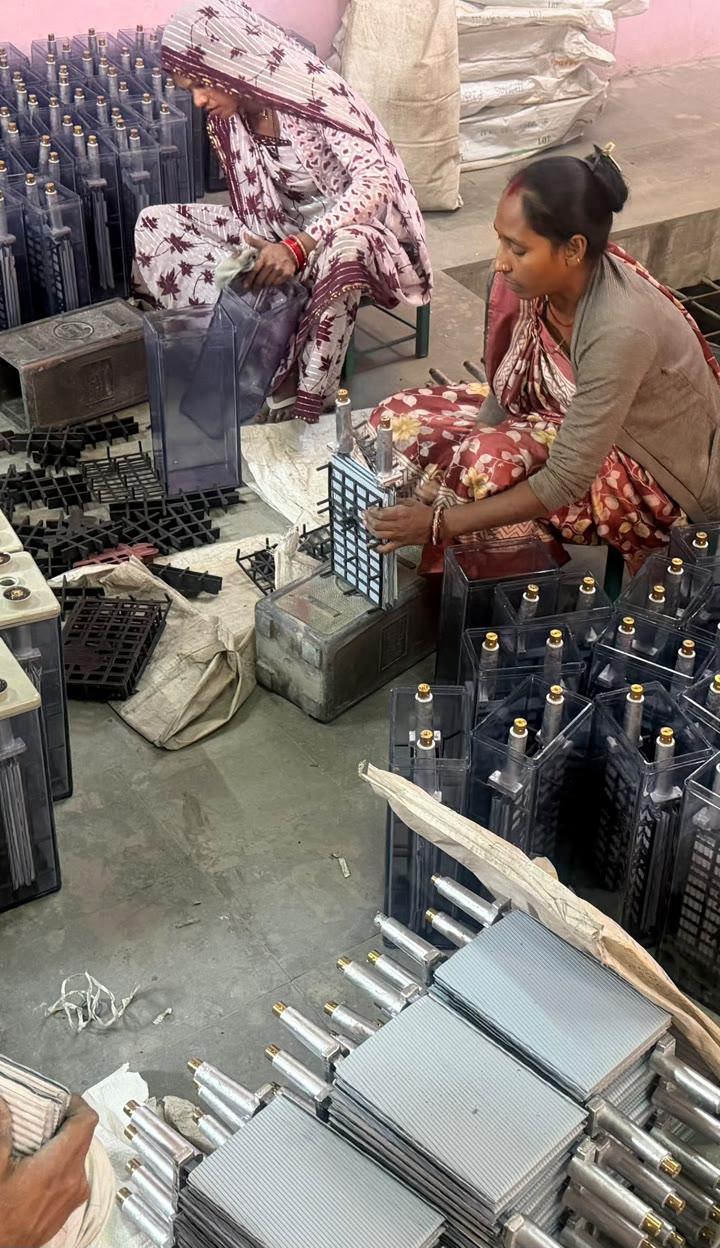
Plate and element assembly.
Tested, packed and documented before it leaves Vijeta Accumulators and New Technologies.
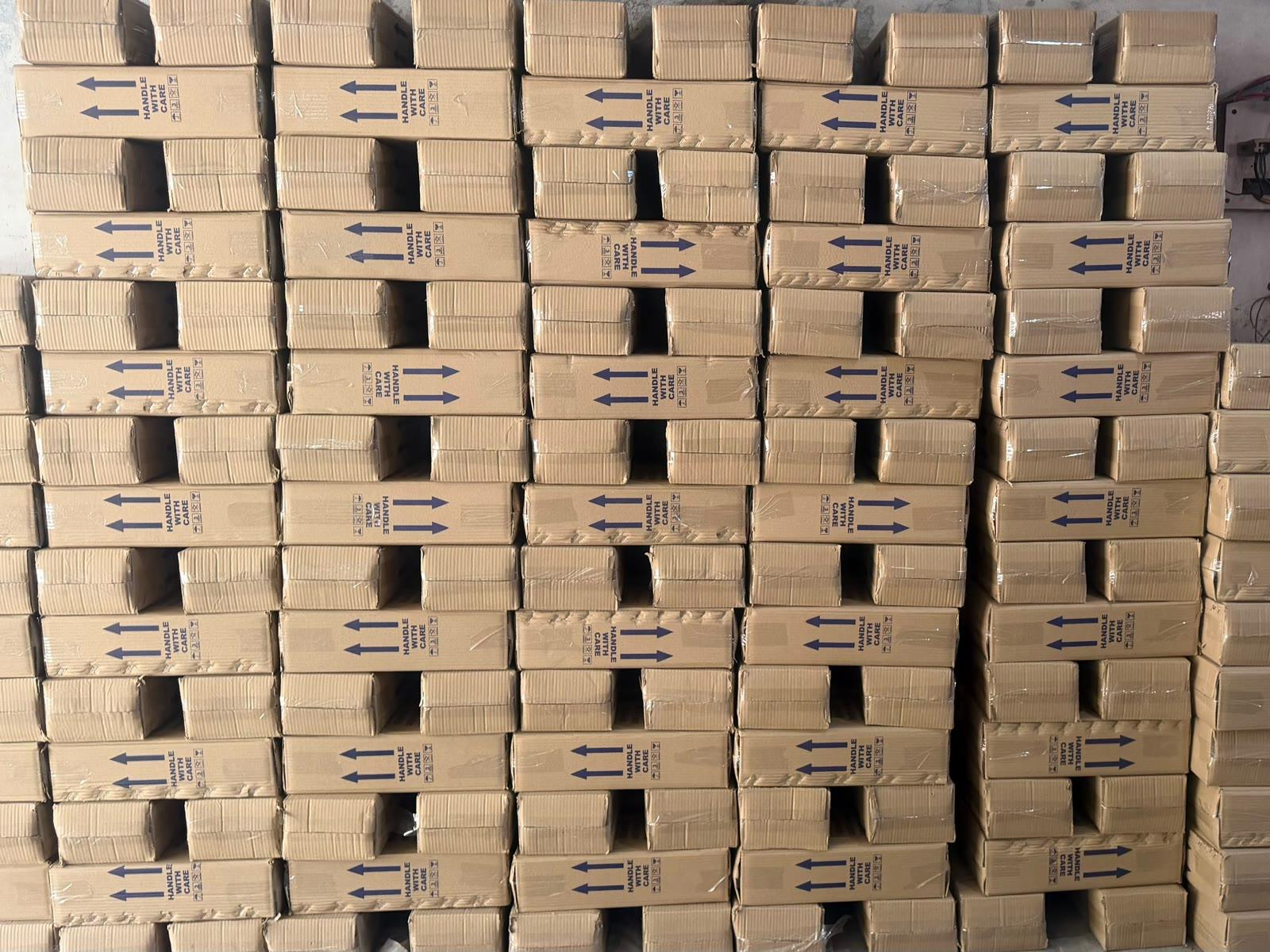
Packed and stacked for dispatch, Vijeta Accumulators and New Technologies.
Packing
Batteries are packed only after the test report is closed. Terminals are protected, cartons reinforced, and every box is marked for handling before it is stacked.
Dispatch
Each dispatch carries its batch test report and warranty terms. Delivery is scheduled against the order, and the site gets a named contact for receipt and claims.
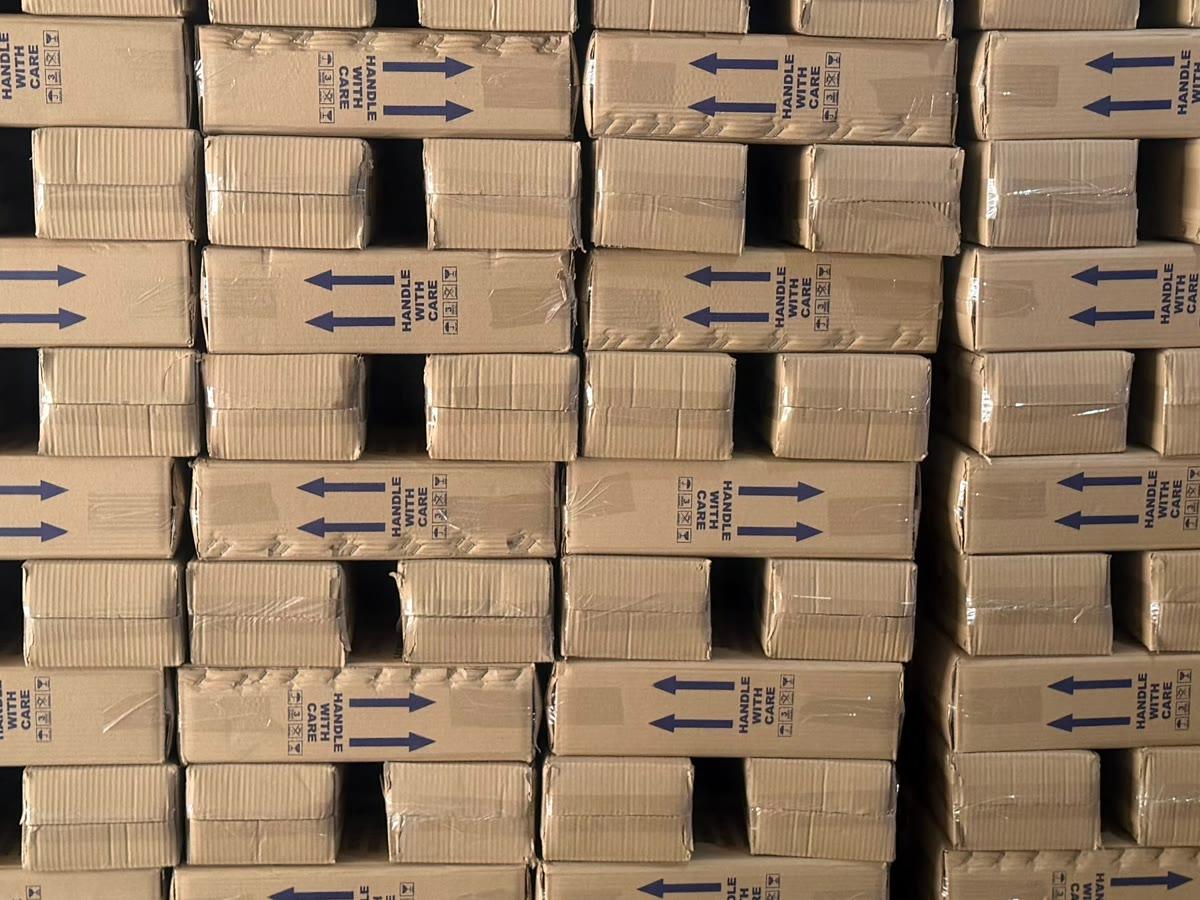
Marked and shrink-wrapped before loading.
Next step
See the series we build on that floor, or send a tender line and let the plant quote against it.